Hairball Prevention for Your Cat

As a cat owner, you likely don't need a special day to draw attention to your cat's hairballs, but April 29 is National Hairball Awareness Day. Let's take a closer look at why hairballs occur and what you need to do about them.
When do hairballs cause problems?
When too much hair remains in the stomach or small intestine, it can cause a serious blockage if your cat cannot vomit it up. If your cat continues to gag, retch, or vomit without producing a hairball, they could have another issue going on. Appetite loss, diarrhea, constipation, and lethargy are also signs that your cat may have a hairball blockage.
What causes hairballs in cats?
Normal grooming behavior results in your cat swallowing some hair. Occasionally, the hair will wad up in the stomach and turn into a hairball. A monthly hairball, although gross, is generally not cause for concern.
What should you do about your cat's hairballs?
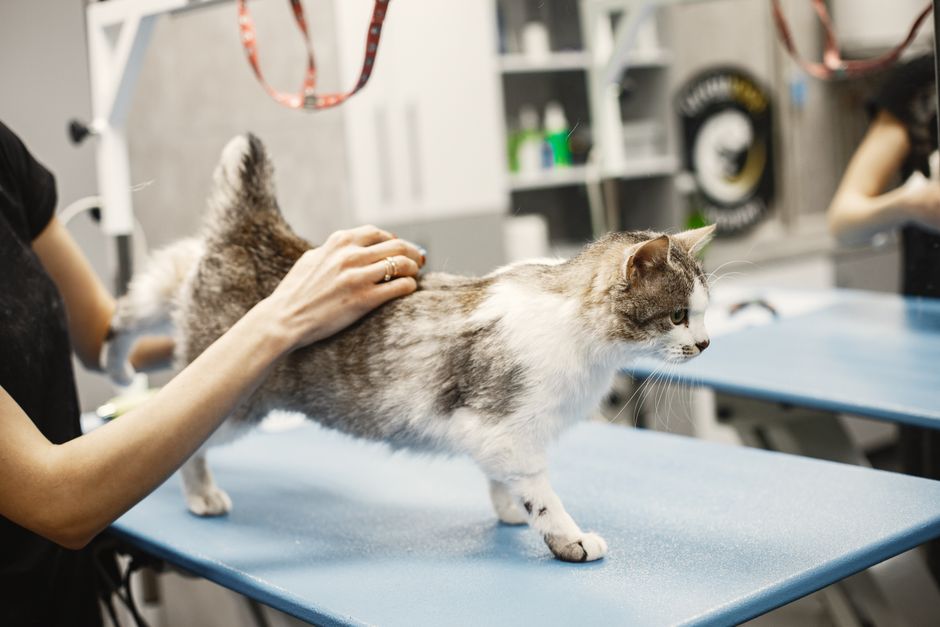
If your cat's hairball production seems excessive, talk to our team about possible solutions, including hairball diets and professional grooming.
If your feline friend appears to be trying to produce a hairball without luck, or if they are grooming excessively, contact our team for help.